Table Of Content
They will improve the navigation and make websites easier to use for all users. It uses boards, lists and cards to help users to organize and prioritize their projects with flexibility. Here, the user can choose the color of the cards to display on a board.© Trello, LLC. Colour blindness affects approximately 1 in 12 men (8%) and 1 in 200 women (0.5%) in the world.
What is Universal Design for Learning (UDL)?
As our world becomes increasingly interconnected and our society continues to evolve and become more diverse, the importance of universal design will only continue to grow. By embracing this philosophy, we can work together to create a more inclusive and equitable world where everyone has the opportunity to thrive and fully participate in daily life. Incorporating energy-efficient technologies, such as LED lighting, high-performance windows, and energy-efficient appliances, can reduce the environmental impact of a space while also providing long-term cost savings for users. Clear, high-contrast signage and intuitive wayfinding systems can help all customers navigate commercial spaces more easily, regardless of their visual, cognitive, or language abilities.
Transitioning from DEI to IDEA: The Imperative of Accessibility
The needs of someone who is an amputee might be very different from someone who is visually impaired. The latter might need many more tactile and audible cues to guide them in spaces whereas an amputee could require some more room to accommodate any aids they might have. The terms “accessibility” and “universal design” are often used interchangeably. Where accessible design focuses on the needs of people who are differently abled, universal design is focused on all people’s needs.
What are the best examples of inclusive design principles?
Ultimately, universal design is about recognizing and celebrating our shared humanity and designing environments that reflect the rich tapestry of human experience. By adopting and championing universal design, we can create a more inclusive and sustainable world, one space at a time. Universal design is an innovative approach that focuses on creating environments and products accessible and usable by everyone, regardless of age, ability, or circumstance. If you want to build products that are most accessible to a wide-range of users; you need to understand the Design for All principles and how to put them into practice. See the Design for All chapter by Constantine Stephanidis in The Encyclopedia of Human-Computer Interaction. They can ensure that your designs meet accessibility standards and guidelines.
W3C Guidelines
High-contrast color schemes can also enhance the overall aesthetic appeal of the space, creating a visually engaging environment for all users. Arranging furniture to create clear and unobstructed pathways can improve navigation and accessibility for all users, including those with mobility aids such as wheelchairs or walkers. This can be achieved by maintaining a minimum clearance of 36 inches between furniture pieces and avoiding clutter. Designing for tolerance for error involves minimizing hazards and adverse consequences of accidental or unintended actions. This principle aims to create environments that forgive user mistakes, helping reduce the risk of injury or frustration. Examples include slip-resistant flooring, rounded corners on furniture, and fail-safe mechanisms on appliances.
Tolerance for Errors Guidelines
The NDA assists in the co-ordination of disability policy, and also promotes Universal Design through the Centre for Excellence in Universal Design. Appropriate size and space is provided for approach, reach, manipulation, and use regardless of user's body size, posture, or mobility. Appropriate size and space is provided for approach, reach, manipulation, and use regardless of user’s body size, posture, or mobility.
Provide Multiple Means of Representation
A Case for Inclusive Design - ARCHITECT Magazine
A Case for Inclusive Design.
Posted: Thu, 29 Nov 2018 13:05:28 GMT [source]
These shortcuts reduce mouse usage and minimize repetitive actions.© Asana, LLC., Fair Use. Choosing furniture that is adjustable, versatile, and serves multiple purposes can help cater to various needs and preferences. Examples include height-adjustable tables, chairs with adjustable armrests, and convertible sofas. Open floor plans provide flexibility and ease of movement, allowing for easier navigation and furniture rearrangement to suit the needs of different users.

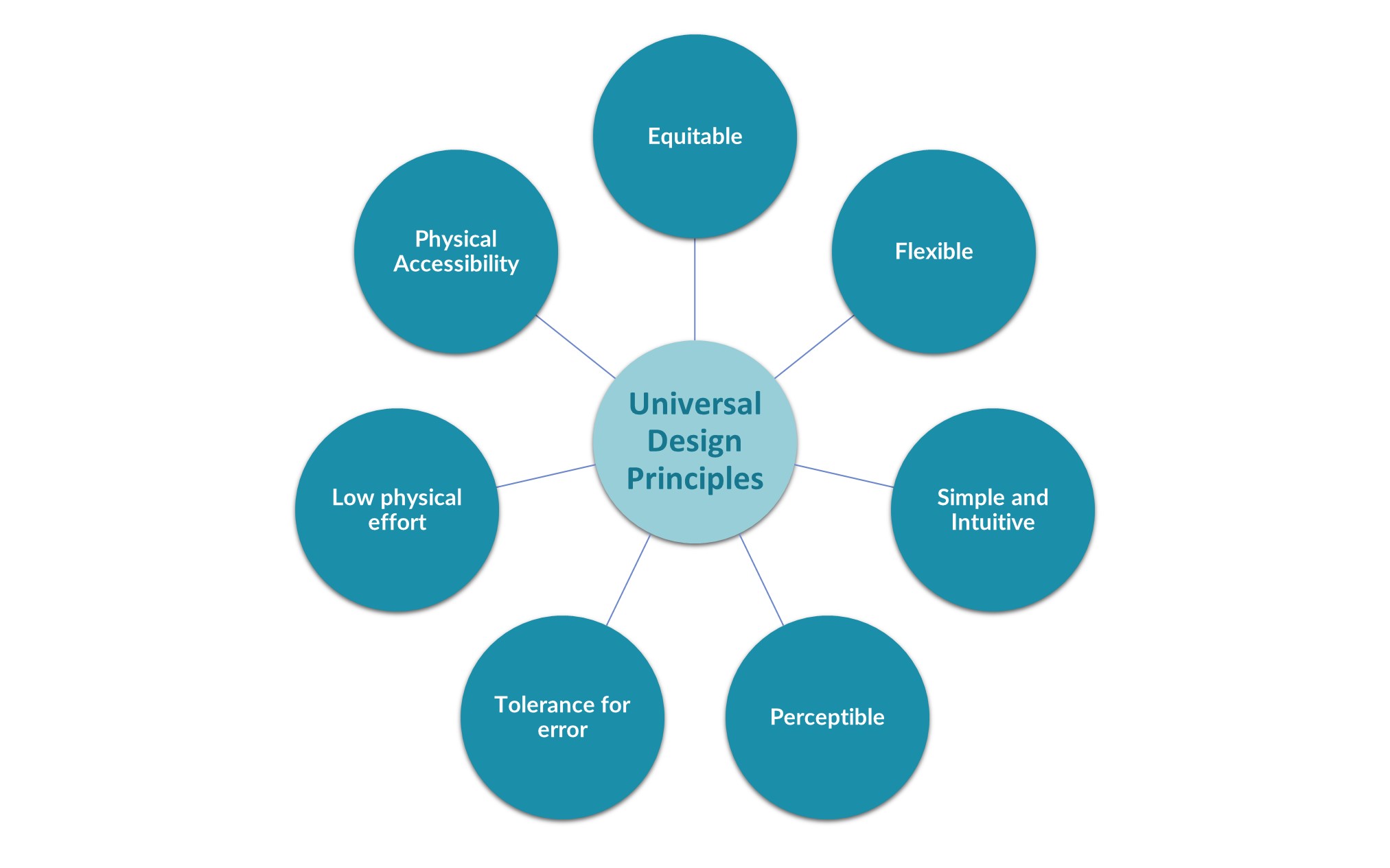
For architecture, this means designing spaces that are receptive to children, adults and the elderly, people with the most diverse appearances and conditions of comprehension and locomotion. Ron Mace and a group of architects who study the subject came to define seven principles to guide and help understand what Universal Design is. First, the Universal project, product or object must be egalitarian, that is, ensure the use of people with different skills, such as sliding doors that open automatically via a sensor. Second, the design must provide use flexibility, accommodating different abilities and allowing people to choose the best way to use it. There are seven principles, and they all include guidelines with actionable approaches for Universal Design.
We actively contribute to the development of relevant national and European standards which have an impact on the lives of persons with disabilities. Designing with an aging population in mind ensures that these individuals can maintain independence, access necessary services, and continue to participate actively in society. Intuitive navigation design refers to the layout and structuring of navigation tools in a way that feels natural and easy to use for most users. It aims to minimize the learning curve and improve the efficiency of user interactions with an app or website.
The term, first coined by American architect Ronald Mace, and then later popularized by architect Selwyn Goldsmith, explores a branch of design that caters to everyone regardless of their age and abilities. This implies going beyond wheelchair-accessible spaces and addressing the vast spectrum of disabilities that can exist. Every year new tools appear, both for designers and for people living with disabilities. For designers, the tools range from colorblind simulators to usability testing done drunk, which is intended to emulate how people feel in desperate, panicked situations when they can’t pay as much attention to the screen. On the other side of the equation, new design guidelines, heuristics, and even better screen readers, voice-to-text systems, and one-handed keyboards are constantly being developed. Here are a few tools we recommend UX practitioners familiarize themselves with.
This could mean providing different representations of the content, different ways for students to interact with it, and different ways to express themselves. By including material that is racially and culturally diverse, students will be more engaged in a lesson and feel appreciated by the teacher. Multiple forms of accessibly designed media are used to communicate services provided. An adjustable table and flexible work area is usable by students who are right- or left-handed and have a wide range of physical characteristics. Software includes on-screen control buttons that are large enough for students with limited fine motor skills to select.
The following table provides examples of practices that build upon each of the items in the four sets of principles that underpin the UD Framework. The following examples for the Universal Design of Instruction that employ all three sets of UD principles were developed by the AccessCollege project of the DO-IT Center with input from a nationwide collaborative team. The Center for Applied Special Technology (CAST) created a set of three principles with roots in cognitive neuroscience to underpin practices and curriculum for teaching and learning. We are pleased to run the Universal Design Grand Challenge Student Competition which promotes the principles of Universal Design across the third-level sector.
Through Universal Design, architecture projects ensure that everybody has the same opportunities and spaces without adaptations, exceptions, or different routes. By eliminating steps and providing a smooth, level entrance, zero-step entrances ensure easy access to homes for wheelchair users, people with mobility impairments, and those with strollers or wheeled luggage. As the global population ages, the demand for age-friendly environments is increasing.


No comments:
Post a Comment